Top Blockchain Technology Benefits for Supply Chain Management
Modern supply chains are more complex than ever. Products move through multiple suppliers, warehouses, logistics providers, customs authorities, and retailers before reaching the end customer.

Modern supply chains are more complex than ever. Products move through multiple suppliers, warehouses, logistics providers, customs authorities, and retailers before reaching the end customer. In this environment, trust gaps, data silos, and manual paperwork create delays, fraud risks, and rising operational costs. That is where blockchain technology benefits for supply chain operations become transformational.
By enabling secure, transparent, and tamper-resistant recordkeeping, blockchain provides a shared source of truth across all participants. Instead of each company maintaining disconnected databases, stakeholders gain synchronized visibility into transactions, shipments, certifications, and compliance records. The result is stronger supply chain transparency, improved traceability, reduced fraud, and faster decision-making.
In this in-depth guide, we will explore how blockchain works in logistics, real-world use cases, measurable advantages, implementation strategies, and why businesses searching for blockchain technology benefits for supply chain solutions are accelerating adoption globally.
What Is Blockchain in Supply Chain Management?
Blockchain is a distributed digital ledger that records transactions across multiple computers in a way that makes records extremely difficult to alter. Once data is recorded and validated, it becomes nearly immutable. In supply chain management, blockchain tracks events such as: Manufacturing dates Shipment departures and arrivals Quality inspections Temperature logs Customs clearances transfers Instead of relying on a central authority, participants verify and store data collectively. This structure builds trust between organizations that may not fully trust each other.
How Blockchain Differs from Traditional Databases
Traditional databases are controlled by one organization. Blockchain networks distribute control across multiple parties. That decentralization is what creates many of the blockchain technology benefits for supply chain ecosystems. Key differences include: Shared data visibility Immutable transaction history Cryptographic security
Consensus-based validation This structure reduces disputes and increases collaboration across partners.
Blockchain Technology Benefits for Supply Chain Operations
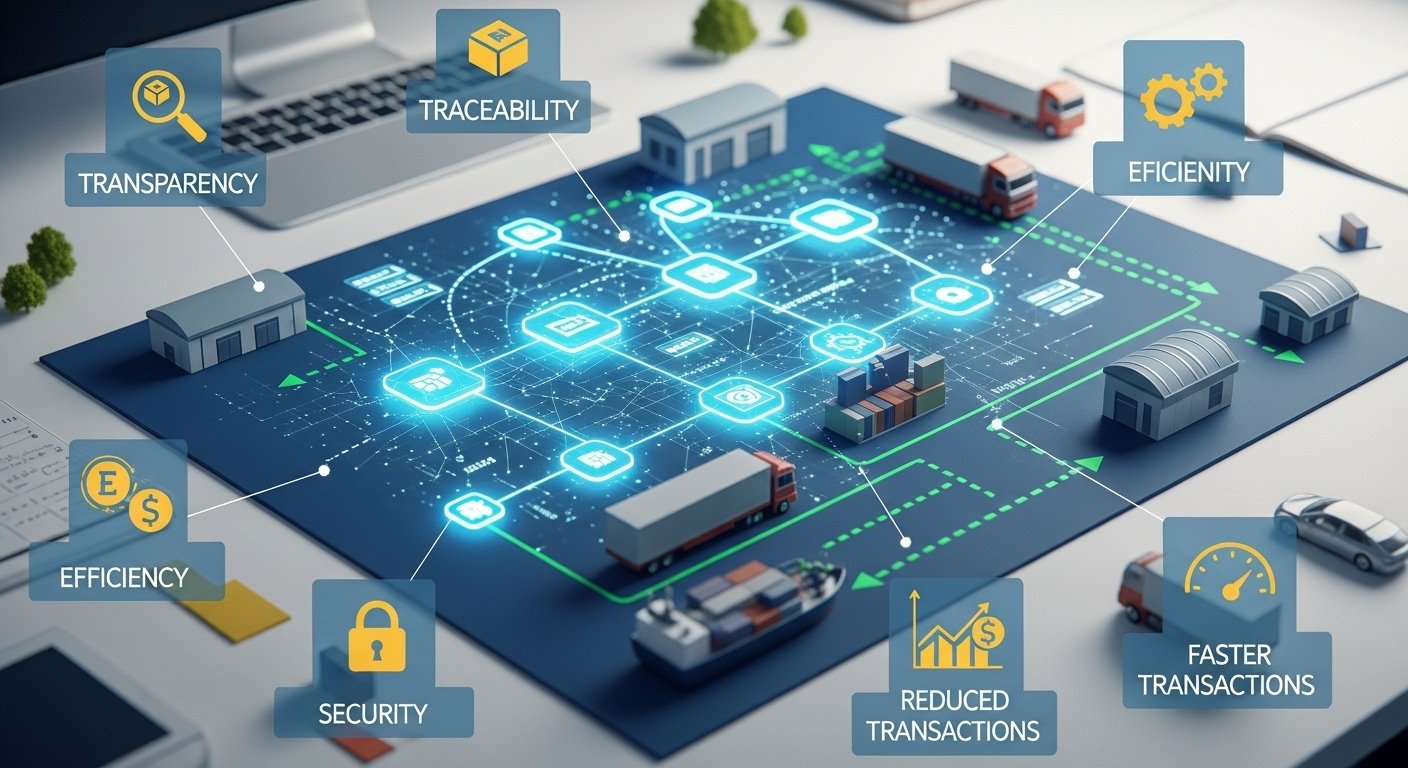
Organizations researching blockchain technology benefits for supply chain solutions typically focus on measurable improvements. Below are the most impactful advantages businesses experience.
Improved Supply Chain Transparency
Supply chain transparency is one of the most searched topics related to blockchain. Companies want full visibility into product origin, handling, and movement. Blockchain creates an end-to-end record from raw material sourcing to final delivery. Every transaction is time-stamped and verified. This visibility helps: Reduce blind spots Improve stakeholder trust Increase customer confidence Strengthen brand credibility Consumers increasingly demand product origin information. Blockchain makes that information verifiable rather than just promotional.
Enhanced Traceability Across the Entire Network
Traceability is critical for industries such as food, pharmaceuticals, electronics, and automotive manufacturing. With blockchain, every step in the journey is recorded sequentially. If a defect or contamination issue arises, companies can quickly identify: Which batch is affected Where it was processed Which shipments were impacted
Which customers received the product Faster recall response reduces financial damage and protects brand reputation. This is one of the strongest blockchain technology benefits for supply chain risk management strategies.
Stronger Anti-Counterfeit Protection
Counterfeit goods cost global industries billions of dollars annually. Blockchain supports anti-counterfeit efforts by documenting chain-of-custody records for products. When combined with QR codes, RFID tags, or IoT devices, blockchain can verify product authenticity from origin to sale. Industries benefiting most include: Luxury goods Electronics Pharmaceutical supply chain Automotive parts High-value retail A secure digital trail makes it harder for counterfeit goods to enter legitimate channels.
Reduced Fraud and Disputes
Shipping disputes and payment conflicts often arise from inconsistent records. Blockchain creates a shared, tamper-resistant ledger that reduces disagreement over: Delivery confirmation Shipment timing Temperature compliance Inspection results When all parties rely on the same verified data, resolution becomes faster and less costly.
Faster and More Accurate Inventory Management
Inventory inaccuracies create lost sales, excess stock, and operational inefficiencies. Blockchain improves inventory management by synchronizing transaction data across partners. When suppliers, manufacturers, and distributors share verified inventory updates, planning becomes more accurate. This reduces stockouts and overproduction.
Blockchain in Logistics and Transportation
The logistics sector handles enormous data flows daily. Manual processes and fragmented systems slow operations.
Real-Time Shipment Tracking
Blockchain can record shipping milestones such as: Departure confirmation Arrival time Customs clearance
Warehouse receipt When combined with IoT sensors, temperature and condition data can also be recorded automatically. This is especially useful in cold chain logistics.
Smart Contracts for Automated Payments
Smart contracts are self-executing agreements coded onto the blockchain. In supply chain environments, they can: Release payments automatically upon delivery Trigger penalties for late shipments Validate quality compliance Authorize goods transfer This reduces administrative workload and speeds up cash flow cycles.
Blockchain for Food Safety and Agriculture
Food safety remains one of the most compelling use cases for blockchain technology benefits for supply chain systems. Farm-to-fork traceability helps identify contamination sources quickly. Instead of broad recalls, companies can isolate affected batches precisely. Benefits include: Faster contamination response Reduced product waste Improved regulatory compliance Greater consumer trust Consumers increasingly search for product origin verification. Blockchain strengthens confidence in food labeling claims.
Blockchain in the Pharmaceutical Supply Chain
The pharmaceutical supply chain faces strict regulatory standards and high counterfeit risk. Blockchain supports: Drug serialization tracking Secure documentation of custody Verification of authorized distributors Regulatory audit readiness Because medical products impact human health directly, accurate tracking is essential. Blockchain strengthens compliance and reduces counterfeit infiltration.
ESG and Sustainability Reporting
Environmental and social governance reporting is becoming mandatory in many markets. Companies must prove ethical sourcing and sustainability claims. Blockchain can document: Supplier certifications Carbon footprint data Labor compliance records Material origin Because records are immutable, blockchain enhances credibility in ESG reporting.
How Blockchain Improves Supply Chain Transparency
To fully understand blockchain technology benefits for supply chain strategies, it is important to examine how transparency works in practice. Transparency improves when: is shared across stakeholders Records are timestamped and verifiable Information cannot be secretly altered Partners operate under agreed governance rules This environment reduces mistrust and strengthens long-term collaboration.
Challenges of Implementing Blockchain in Supply Chains
Blockchain adoption requires strategic planning. Companies must consider several challenges.
Data Quality Risks
Blockchain preserves data integrity but cannot correct incorrect entries. Input validation processes must be strong.
Integration with ERP Systems
Integration with existing systems such as ERP, WMS, and TMS platforms requires technical coordination.
Cost and Consortium Governance
Multi-party networks require shared governance agreements. Clear roles and incentives are necessary to avoid delays. Despite these challenges, organizations pursuing blockchain technology benefits for supply chain innovation often find long-term ROI justifies the investment.
Industries Leading Blockchain Adoption
Industries frequently appearing on the first page of Google search results for blockchain supply chain topics include: Food and agriculture Pharmaceuticals Retail and e-commerce Manufacturing Luxury goods Automotive
Electronics Each industry faces traceability, compliance, and transparency challenges that blockchain addresses effectively.
Step-by-Step Strategy to Capture Blockchain Value
Companies should approach blockchain adoption strategically. Start with one high-impact workflow such as recall management or cold chain monitoring. Identify measurable KPIs including: Dispute reduction rate Recall response time Inventory accuracy improvement Audit preparation time Scale gradually as value becomes clear.
Conclusion
Global supply networks are only becoming more interconnected. Complexity increases vulnerability to fraud, inefficiency, and compliance risks. The measurable blockchain technology benefits for supply chain transformation include enhanced transparency, improved traceability, stronger anti-counterfeit systems, better inventory management, automated smart contracts, and more reliable compliance documentation.
Organizations that adopt blockchain strategically gain competitive advantages in trust, efficiency, and customer confidence. Instead of reacting to crises, they operate with verified, shared data that strengthens collaboration across the entire ecosystem. If your organization is exploring digital transformation, now is the time to evaluate how blockchain technology benefits for supply chain innovation can increase transparency, reduce risk, and build a future-ready logistics network.